Ever wondered what “notice period” means when someone mentions it in texts, chats, or job conversations?
🤔 Understanding this term is super important because it pops up everywhere—from WhatsApp messages about jobs to LinkedIn updates and even casual chats with colleagues.
Knowing it helps you stay professional, avoid misunderstandings, and respond confidently. Updated for 2026, here’s your ultimate guide to notice period meaning! 🚀
What Does “Notice Period” Mean? 📝 (Definition & Origin)
A notice period is the time duration an employee must inform their employer before leaving a job or the time an employer gives before ending employment.
- Origin: The concept comes from labor laws and professional workplace practices.
- Purpose: It ensures smooth transitions, giving both parties time to prepare for changes.
For example:
“I handed in my resignation yesterday, and my notice period is one month.”
Here, the employee must continue working for 30 more days before officially leaving.
How to Use “Notice Period” in Texts or Chat 💬
The phrase “notice period” is not just formal—it appears in casual chats too! Here’s how people use it:
- Work-related discussions:
- “Hey, what’s your notice period at your current job?”
- Professional networking:
- “I’m available to join the team after my notice period ends.”
- Career advice chats:
- “Don’t forget to factor in your notice period before accepting new offers.”
💡 Pro Tip: Always mention the exact duration to avoid confusion.
Examples of “Notice Period” in Conversations 📱
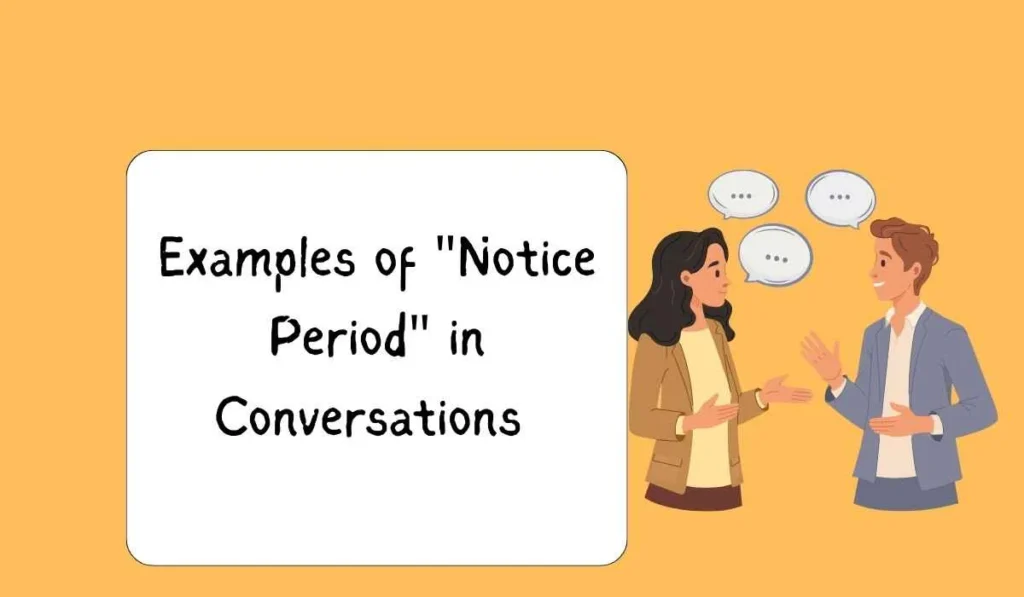
Here are some real-life examples you might see online or in messages:
- LinkedIn DM: “Congrats on your new role! When does your notice period finish?”
- WhatsApp message: “I can join the project, but my notice period is 2 weeks.”
- Email context: “Please note that my notice period is one month as per contract.”
Notice how it’s short, precise, and professional, even in casual messaging.
Common Mistakes or Misunderstandings ❌
Even though it’s simple, many people misuse notice period:
- Confusing start date: Some assume the notice period starts after the last working day—wrong! It starts the day you give notice.
- Ignoring duration: Not mentioning the length can cause delays or misunderstandings.
- Assuming flexibility: Employers may or may not shorten it. Always check your contract.
✅ Quick tip: Always clarify exact days/weeks when using it in texts or emails.
Related Slangs or Abbreviations 🔄
While “notice period” is formal, it sometimes mixes with casual abbreviations:
- Resign / Resignation – When someone decides to leave a job.
- JD – Job Description (often discussed before considering notice period).
- Joining Date – The day you start a new job, often planned after notice period.
- FYI – “For your information,” can be used when notifying about notice period.
Example in chat:
“FYI, my notice period ends next Friday, so I can start on Monday 😊”
Why Understanding “Notice Period” Matters in 2026 🚀
- Professionalism: Helps you maintain good relationships with current employers.
- Planning ahead: Both employees and recruiters can schedule transitions smoothly.
- Avoid misunderstandings: Clear notice period prevents legal or contractual issues.
💬 Updated 2026 tip: In remote work and freelancing, notice periods are also important for project handovers.
Conclusion:
Understanding notice period meaning is crucial for anyone navigating the modern workplace or casual career chats.
It ensures smooth transitions, clear communication, and professional credibility. Remember, specifying the duration and start date avoids confusion and makes your messages more effective.
Whether you’re texting a friend about a new job, replying to LinkedIn DMs, or updating your professional contacts, knowing how to use notice period correctly keeps you ahead in 2026’s fast-paced work culture.
Share your favorite text abbreviation or workplace tip in the comments! 💬

I am Suleman Malik, a passionate writer at LearnWordMeaning, dedicated to exploring the power of words and language.
I love explaining meanings, origins, and interesting facts about words in a simple and engaging way. Through my writing, I aim to help readers learn something new every day while enjoying the beauty of language.