In today’s fast-paced digital world, texting and online chatting have become a universal language. But if you’ve ever received a message with “hyd” and stared at your screen wondering, “Wait… what does this mean?”, you’re not alone.
Understanding abbreviations like hyd is crucial because it helps you keep up with conversations, avoid misunderstandings, and even sound more fluent in digital lingo.
Whether you’re a social media pro, a casual texter, or someone navigating work chats, decoding abbreviations can save time and make communication smoother.
Let’s dive into everything you need to know about hyd meaning in text, including its origin, usage, and common mistakes.
🤔 What Does “HYD” Mean in Text? (Definition & Origin)
HYD is an abbreviation commonly used in texting and online chats. It stands for:
“How You Doing?”
Yep, it’s that simple! Think of it as a shorthand way of asking someone how they’re feeling or what’s going on—similar to “Hey, what’s up?” or “How are you?”.
Origin of HYD
- The abbreviation HYD emerged from early internet and SMS culture, where every character counted due to message length limits.
- Over time, HYD became popular among teenagers and young adults on platforms like MSN Messenger, AIM, and now WhatsApp, Instagram, and Discord.
- While “How You Doing?” has been around for decades in spoken English, HYD gave it a quick, casual digital twist.
Fun Fact: If you’re a Friends fan, you might hear Joey’s iconic “How you doin’?”—technically, he was ahead of his time using HYD before abbreviations became mainstream! 😎
💬 How to Use “HYD” in Texts or Chat
Using HYD is straightforward, but context is key. Here’s a breakdown:
1. Casual Conversations
- Perfect for friends, peers, or social groups.
- Example:
Friend: “HYD? Haven’t talked in ages!”
You: “I’m good, just busy with work. You?”
2. Social Media Messaging
- Quick way to engage followers or chat with acquaintances.
- Example: Instagram DM: “HYD today? Looks like a fun day from your posts 😎”
3. Informal Work Chats (if appropriate)
- Use with colleagues you know well and in casual contexts.
- Example: Slack message: “HYD? Just checking in before the meeting.”
Tips for Correct Usage
- Always capitalize HYD if you want to emphasize it, but lowercase is acceptable in casual texting.
- Pair it with emojis to convey tone:
HYD? 😊 or HYD? 😅
📝 Examples of “HYD” in Conversations
Scenario 1: Catching Up With a Friend
You: “HYD? Haven’t seen you in forever!”
Friend: “All good! Just finished a marathon 😂”
Scenario 2: Starting a Conversation Online
You: “HYD? Just joined this Discord server and wanted to say hi 👋”
New Friend: “Welcome! I’m great, thanks for asking 😎”
Scenario 3: Texting Your Crush
You: “HYD? Hope your day’s going well 😏”
Crush: “Pretty good! Just got back from a coffee date ☕”
Pro Tip: Use HYD sparingly with people you don’t know well—it’s informal and might be confusing if they’re unfamiliar with the abbreviation.
⚠️ Common Mistakes or Misunderstandings
- Misreading HYD as a location
- Some may think HYD refers to Hyderabad, especially in international chats. Context is crucial.
- Using HYD in formal emails or professional documents
- Stick to full phrases like “How are you doing?” in formal communication.
- Overusing abbreviations
- Sending messages like: “HYD? BRB TTYL LOL” can confuse people if they’re not familiar with multiple texting slangs.
- Ignoring tone
- Without tone, HYD might seem abrupt. Emojis or additional context can soften it.
🔗 Related Slangs or Abbreviations
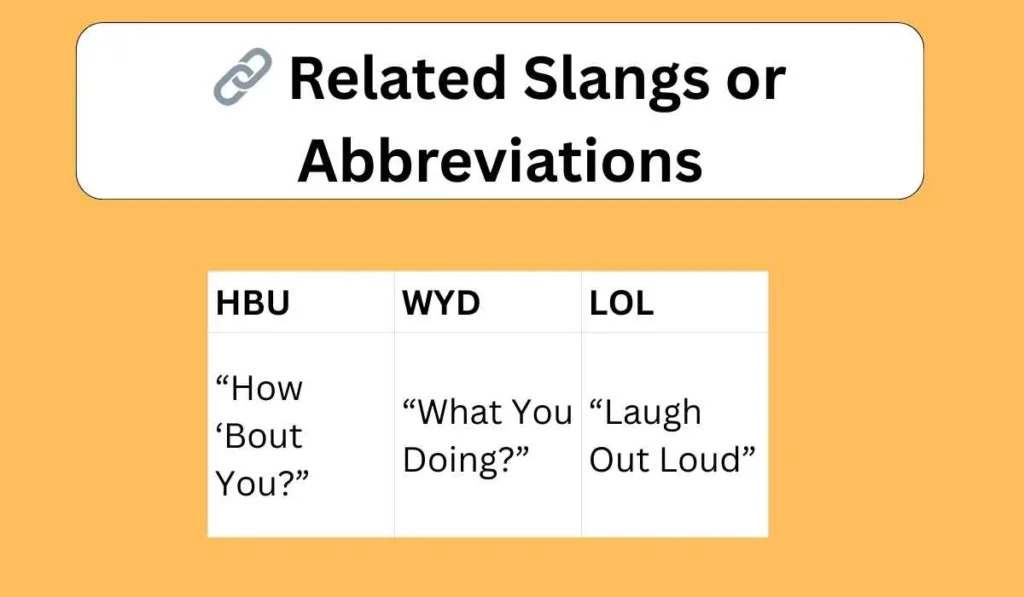
- HBU – “How ‘Bout You?” (to return the question)
- WYD – “What You Doing?” (to ask someone’s activity)
- LOL – “Laugh Out Loud” (common reaction)
- BRB – “Be Right Back” (quick status update)
- TTYL – “Talk To You Later” (ending a chat)
✅ Conclusion:
Understanding HYD meaning in text helps you communicate efficiently, sound more casual, and avoid awkward pauses in chats.
- Quick Recap: HYD = How You Doing?
- Use It: In casual texts, social media chats, and friendly online conversations.
- Avoid Mistakes: Don’t confuse it with locations, overuse it, or use it in formal settings.

Hi, I’m Musaghumman, the mind behind LearnWordMeaning. I turn confusing words into easy meanings so anyone can learn, understand, and use English with confidence.